Books on karma are most useful when they help us examine our own actions carefully. The subject becomes less helpful when we use it only to explain why someone else deserves what has happened to them.
Start with the wider teaching
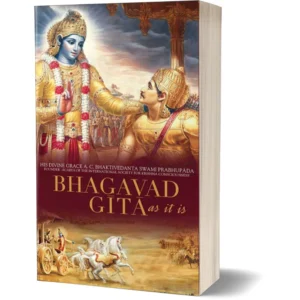
Bhagavad Gita As It Is places action within a conversation about duty, knowledge, and devotion. Read the chapters in sequence rather than collecting sentences about success and failure. Keep a note of where Krishna is discussing action itself and where He is discussing the motive behind it.
Bhagavad Gita 3.9 distinguishes work offered in sacrifice from action that binds a person. This devotional context is important when exploring karma through Srila Prabhupada’s books.
Choose a focused companion
Laws of Nature is a relevant title for readers interested in action and its consequences. Dharma: The Way of Transcendence offers another route into the relationship between spiritual life and one’s conduct. Check each product’s edition and language options before ordering.
You do not need both at once. Choose one, identify the question you want it to clarify, and return to the Gita when you need the broader context. Finishing a book with one well-formed question can be more valuable than finishing with several borrowed slogans.
Keep reflection concrete
After a sitting, ask where responsibility is visible in your own day. Is there work you have postponed, someone you have spoken to carelessly, or a commitment you can now fulfil? These are manageable points of reflection. They do not require you to know the hidden history of every event.
For a distinction between karma and fatalism, continue to Karma and Free Choice. For the relationship with rebirth, visit the karma, reincarnation and soul hub. Each subject is easier to understand when given its own careful treatment.
Continue your reading
See the Karma, Reincarnation and the Soul: A Vaishnava Reading Guide for the full pathway. Related guides: Books on Reincarnation: A Careful Vaishnava Reading Path; The Soul and the Changing Body: Beginning with the Bhagavad Gita.